

Solve Sore Back, Blisters, and Tingly Legs In A Kayak With Uncommon Solutions

Typical challenges I hear from new and even some experienced paddlers have to do with lifting and carrying their kayak, feet falling asleep, or back discomfort. There are often a variety of uncommon solutions to these common problems.
Copyright © August 2026 by CanoeSport Outfitters | Est. 1992 | 34 Years Serving Iowa Paddlers
Paddling looks peaceful and relaxing. When done properly and with the right mindset it typically is. However, for some, it can feel like a full-body workout. A sore back, tired shoulders, a stiff neck, and tight hamstrings aren't always signs of being out of shape — they're often signs of a few small habits or outfitting concepts that are usually fixable. After years of renting boats, teaching lessons, and paddling more miles than I can count, I've noticed the same handful of problems come up again and again. The good news is that the fixes are usually simple, and often the opposite of what your instincts tell you to do.
Lower Back Pain, Numbness, or Stiffness
This is the number one complaint I hear from new kayakers, and it's not uncommon for experienced paddlers to deal with it too. There isn't always a fix for a serious or degenerative issue, but a surprising amount of everyday back discomfort can be resolved with adjustments that feel wrong at first.

Start with your posture. Good balance and an efficient paddle stroke both depend on sitting upright. Leaning back like you're in a recliner feels relaxed, but it disengages your hips from the boat. Once your hips aren't locked in, you lose the connection that keeps you stable, and you'll feel tippier than you actually are. Leaning back also shortens your stroke into more of a push than a pull — a proper forward stroke needs the blade to enter the water near or past your toes, which is physically impossible if you're reclined.
The fix is to sit up and let your foot braces and backrest support that position rather than fight it. It takes a bit of core strength at first, but that strength builds quickly, and most people find their back discomfort fades as their posture improves.
Loosen the backrest. This is the counterintuitive part. Most paddlers assume more back support means less pain, so they crank the backrest as tight as it goes. In practice, this usually increases pressure on the nerves running through your lower back and makes things worse, not better. I've watched plenty of paddlers get real relief simply by loosening the backrest — or removing it entirely.
If you still want some support, try lowering the backrest so it only contacts the small of your back — true lumbar support — rather than your entire lower spine.
I'll add here that I've dealt with my own share of back issues over the years, including degenerative disks and sciatic nerve pain running down my left leg, so I don't say any of this lightly. Posture and removing all back support were the things that gave me real relief. With no back rest or even a back band I’m free to lay back at times and completely stretch my lower back out which seems to alleviate most of my basic problems.
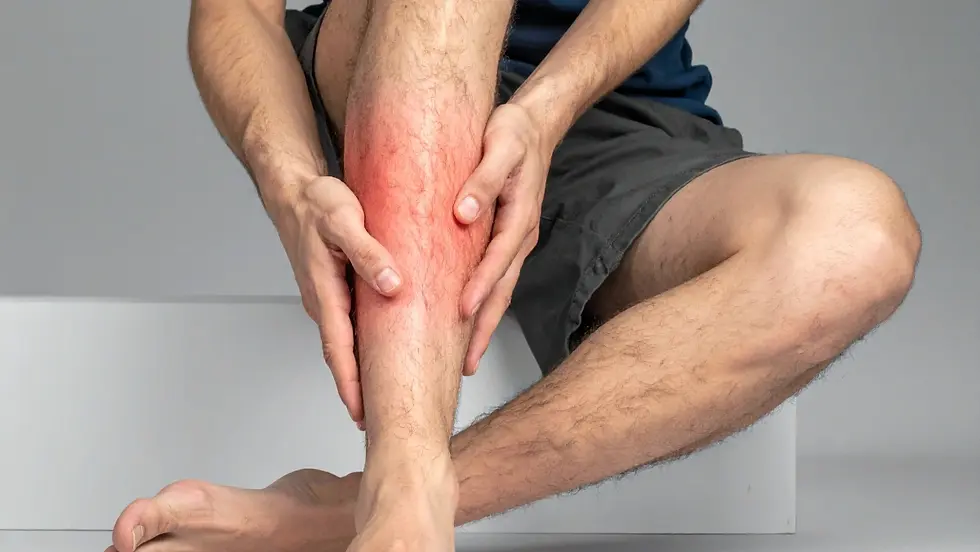
Legs Falling Asleep
Numb, tingly legs are usually a circulation problem caused by the same root issue as back pain: too much pressure in the wrong places. The fix is similar — ease up on the backrest to reduce pressure on the lower back and hips.
Beyond that, try placing a pad or foam block under your knees. A paddle float is a great tool for this. It's designed to help you re-enter your kayak after a capsize, but it works just as well as an inflatable cushion — inflate it to whatever firmness you like and tuck it under your thighs inside the cockpit. Elevating your knees slightly takes pressure off the back of your legs and often keeps your feet from falling asleep. As a bonus, it frequently helps with back discomfort too, since it changes the angle of your hips in the seat.
Blisters on the Hands
Blisters almost always come down to grip. New paddlers tend to white-knuckle the shaft, which creates friction with every stroke. Relax your grip — you don't need to hold on tight. Your "high hand," the one furthest from the water during your stroke, can actually stay open. Instead of gripping, just push against the shaft with your open palm on that side.
If loosening your grip doesn't fully solve it, fingerless biking gloves are a cheap and effective fix, and handlebar tape wrapped around your paddle shaft works nearly as well if you'd rather modify the paddle than wear gloves.
Sore Heels
Sore heels usually come from resting them on the hard plastic or fiberglass hull for hours at a time. A cheap fix is gluing foam pads to the bottom of the kayak where your heels rest, or better yet cutting a section from an old yoga mat and placing it loose inside the cockpit. Either option adds just enough cushion to make a multi-hour paddle comfortable without changing your footing or control.
Difficulty Getting Up Out of a Kayak
Getting up out of a low seated position, especially after your legs have been in one position for a while, can be awkward and hard on the knees and back. The trick is to stay in a foot or two of water while you do it rather than beaching the boat and standing up on dry land. The water keeps the kayak up off the ground and reduces the distance required to stand up.
Difficulty Lifting a Kayak Out of the Water
This is the same principle applied to lifting you kayak: let the water do most of the work. When I'm putting away 75-pound tandem kayaks at my rental locations, I don't lift them off the ground. I wade into about knee-deep water, reach across the cockpit, and roll the boat up onto my thighs. From there, I rest the cockpit on my shoulder and only need to straighten my legs to stand up — the water has already supported the boat through the hardest part of the lift. Trying to muscle a full-size kayak up off a beach is a fast way to strain your back; letting buoyancy carry the weight until the last possible moment saves your body every time.
Shoulder and Arm Fatigue
This one isn't in every "how to kayak" guide, but it's one of the most common issues I see, especially with paddlers who are new to the activity. Arm fatigue almost always means the paddler is relying on their arms and shoulders to generate power instead of their torso. Watch an experienced paddler and you'll notice the bend in their elbow doesn’t grow during their stroke — power comes from rotating the torso with each stroke, locking the elbows and using the big muscles of the core and back rather than the smaller muscles of the arms.
If your shoulders, forearms, or biceps are burning after only a few miles of paddling, try exaggerating torso rotation on your next paddle. Plant the blade, rotate through your core to pull the boat up to the paddle blade, and let your arms mostly just hold the paddle in position rather than doing the pulling. It feels strange at first, especially if you've been paddling "arms only" for a while, but it's dramatically more efficient and takes a lot of pressure off your arms.
The Common Thread
Almost every one of these problems traces back to the same idea: our instincts under discomfort are often wrong. We tighten the backrest when we should loosen it. We lean back when we should sit up. We try to lift with our arms when the water is offering to do the work for free. Paddling rewards patience and a willingness to try the counterintuitive fix before assuming something is broken or that you're just not built for it.
If you're dealing with a persistent issue that these adjustments don't solve, it's always worth checking in with your outfitter or instructor — sometimes it's a boat-fit problem rather than a technique problem, and a different seat position, footbrace setting, or even a different boat can make all the difference.

Comments